Introduction
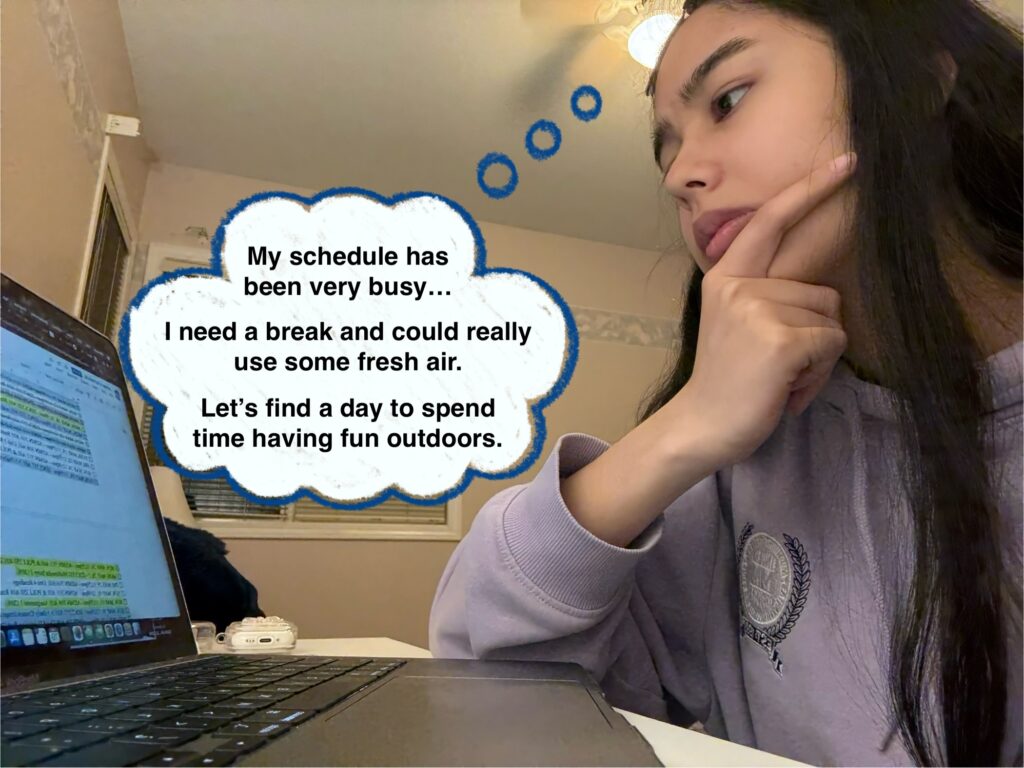
As of late, my life has been overwhelmingly filled with stressful day-to-day activities, including my recent move to Kelowna and my need to keep up with online courses at the University of Victoria (UVic). Since the start of the summer academic term, I have not yet had a chance to properly go out for a day and have some fun. This multimedia story follows an afternoon to evening of fun on Okanagan Lake as I paddle-board along the Kelowna Paddle Trail with my partner, enjoying the hot sun and the surprisingly cold yet refreshing water.
Making Our Way to Rotary Beach
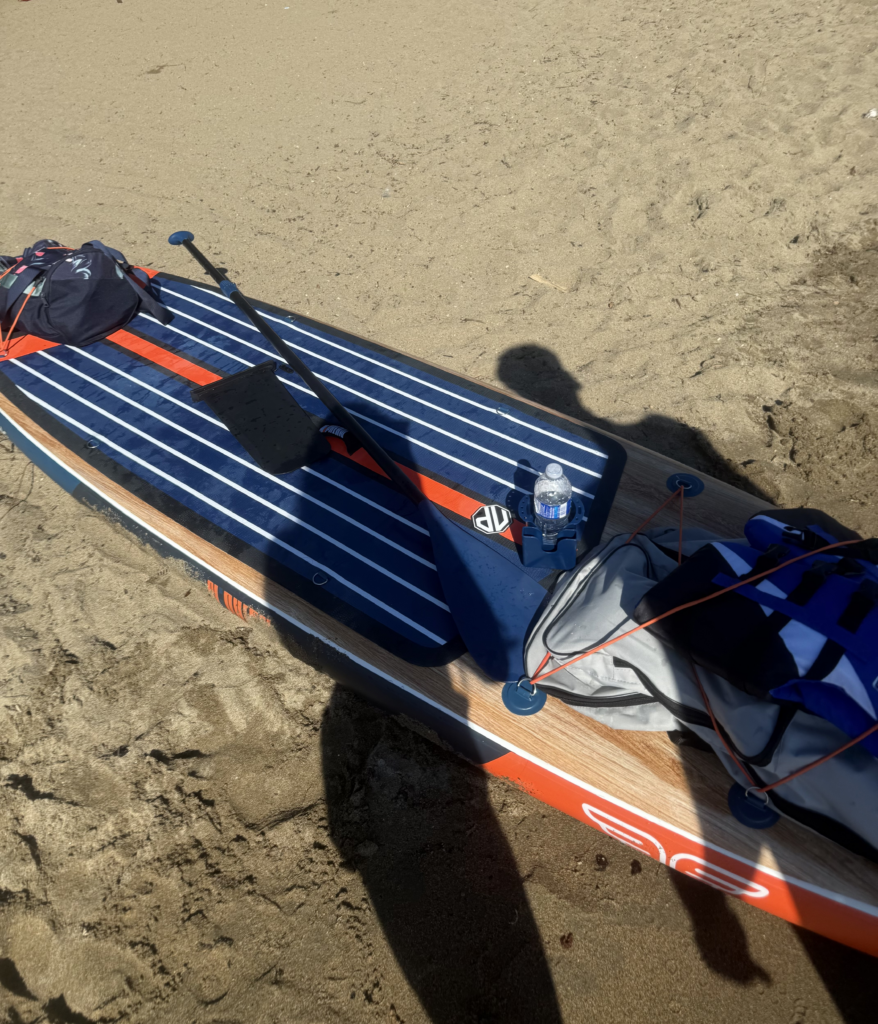
On a sunny afternoon around 3:00pm, my partner and I started getting ready to head out for paddle-boarding. The weather was looking very promising with a temperature around 29 degrees Celsius and not a single cloud in sight. We packed everything we needed, including extra clothes and towels, water bottles, sunscreen, and all of the paddle-boarding gear (the paddle-board, paddles, fin attachments, life jackets, waterproof phone pouches, etc.). Finally, we headed out the door and made a short drive to the beach.
We arrived at Rotary Beach around 4:00pm and began inflating the paddle-board, attaching the fins, putting on sunscreen, and securing the bags and life jackets to the board. We then made our way to the sandy shore to begin the adventure on the water.
Paddling Along the Kelowna Paddle Trail
It was quite uncomfortable getting into the water and on the paddle-board with the baking hot sand making walking barefoot painful and the water being surprisingly very cold. However, it was easy for us to both balance on the paddle-board as the waves were very mild, so it did not take long at all before we were finally paddling on our way.
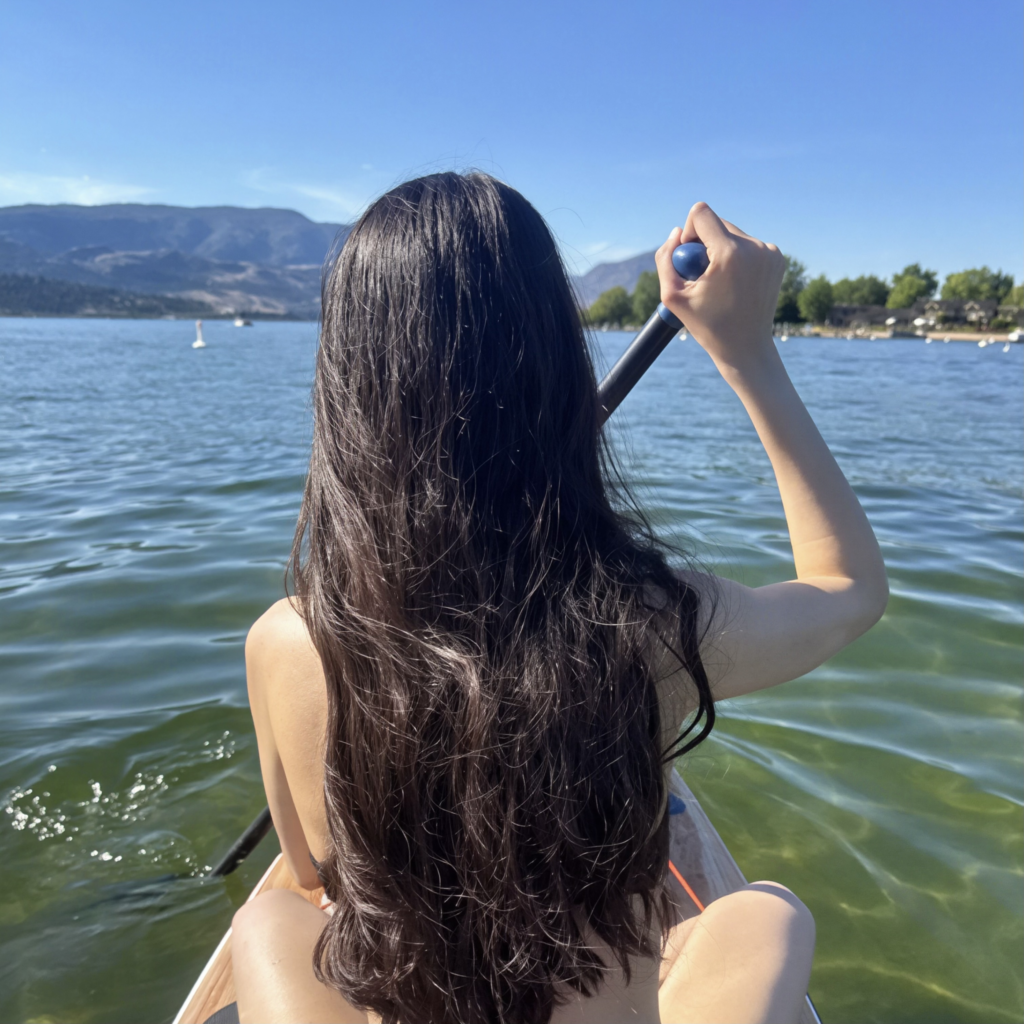
We decided to take turns paddling, as we only had one paddle. I noticed it was hard to paddle from where I was sitting at the front of the board. I kept turning in either one direction or the other instead of heading straight. It took some time to adjust our positions on the board before we could both be able to paddle straight from where we sat.
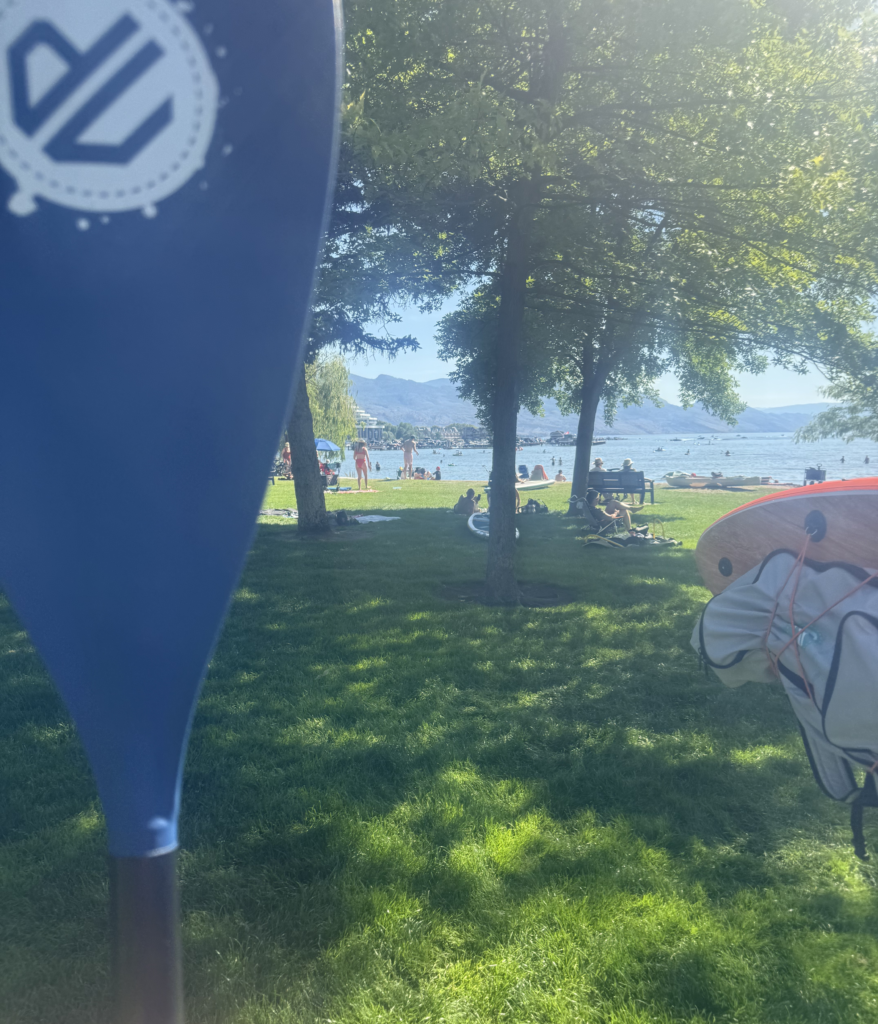
As we paddled, we took in the beautiful views of the mountains, sandy shores, and the clear water that sparkled in every direction. The sunshine felt warm, the air was fresh, and I watched as the waves rippled gently across the lake.
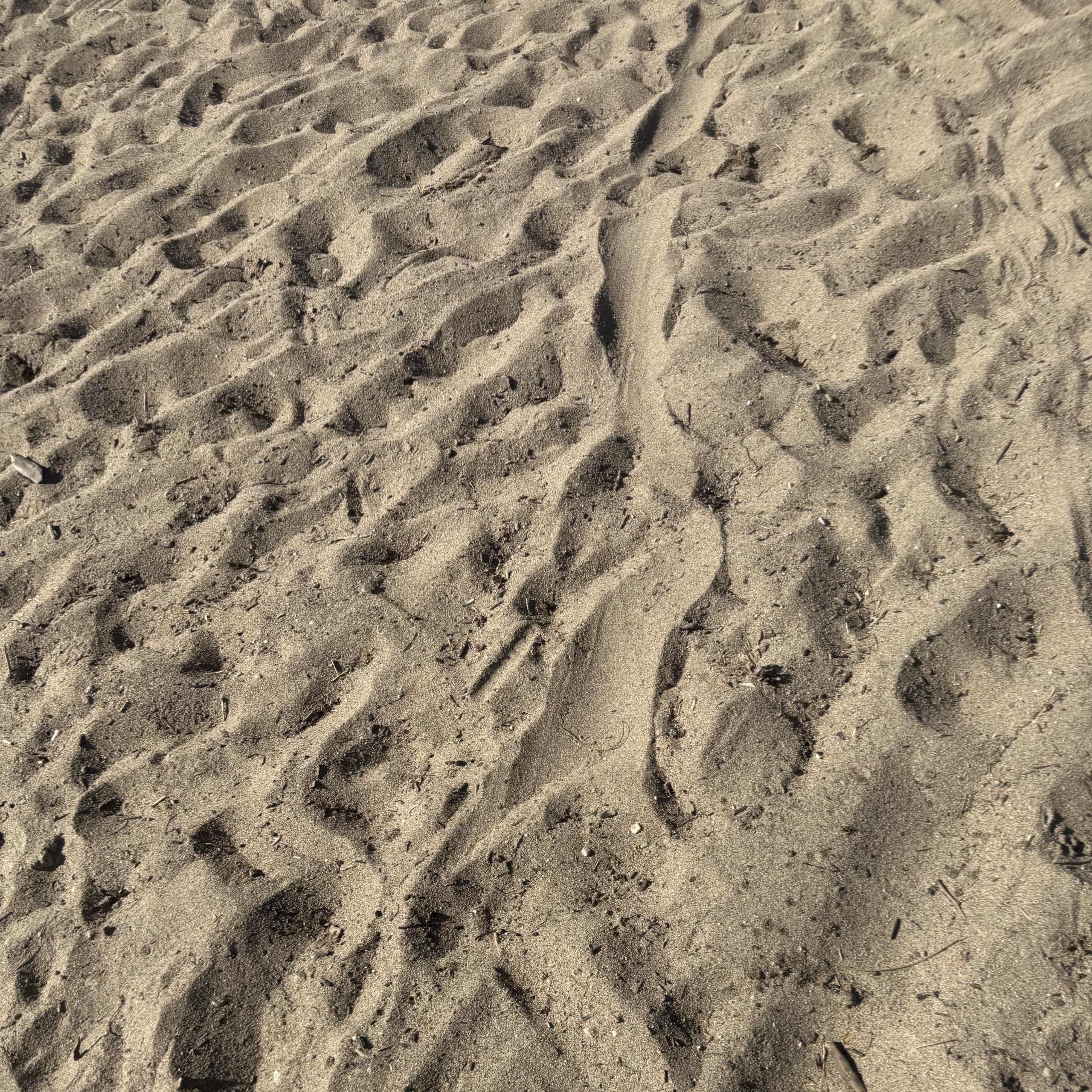
We kept paddling, passing by several boats, swimmers, and other paddlers on our way to Boyce-Gyro Beach. From the surface of the water, we could see the sand under the water had soft ridges. I took a video underwater to see it more clearly, and was marvelled by the beauty of the sun’s rays travelling across the soft sand.
Arriving at Boyce-Gyro Beach
As we approached Boyce-Gyro Beach, we began to see many more people out paddle-boarding, swimming, and playing on the shore. All around us we could hear the motors of boats, kids playing in the water, and loud music from a group of people on the beach. It was nice to see so many people out and about enjoying the sun.
We decided to stay out on the water for a while near the beach and take in our surroundings. My boyfriend swam for a bit while I remained on the board, photographing the mountains and the buildings nearby. I felt so much more relaxed being out in the sun and seeing the beautiful Okanagan Lake.
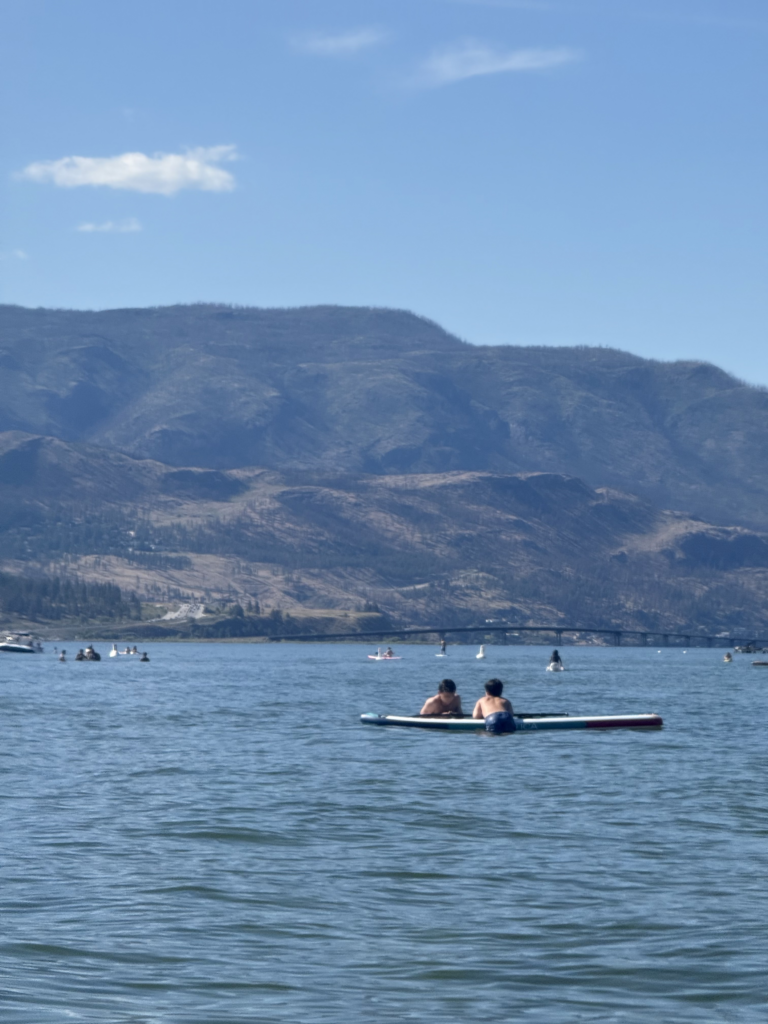

After being out on the water for a while, we decided to head towards the shore to rest on the sandy beach. When we got to the shore, we could see many people laying on towels under umbrellas or directly under the hot sun. Many people carried their own paddle-boards and many waded in the water. We sat and talked about our little journey and how much fun it had been. I spoke about my schoolwork and how it’s been such a relief to not have to be studying.
As we sat on the beach, I watched as the seagulls flew overhead, leaves on trees blew in the faint wind, and the waves of the water splashed upon the shore.
Heading Back Home
After resting for a while, it was time to head back. We attached the fins and bags once again to the paddle-board and began to paddle back to Rotary Beach. On the way back, I decided to take an audio recording of the sounds underwater. I thought it sounded very cool, almost like glass clinking and bubbles popping.
As we reached the shore, seagulls waited to greet us back. I captured one on camera as it paced back and forth on the beach, snapping its beak as if it were anticipating we were bringing food.
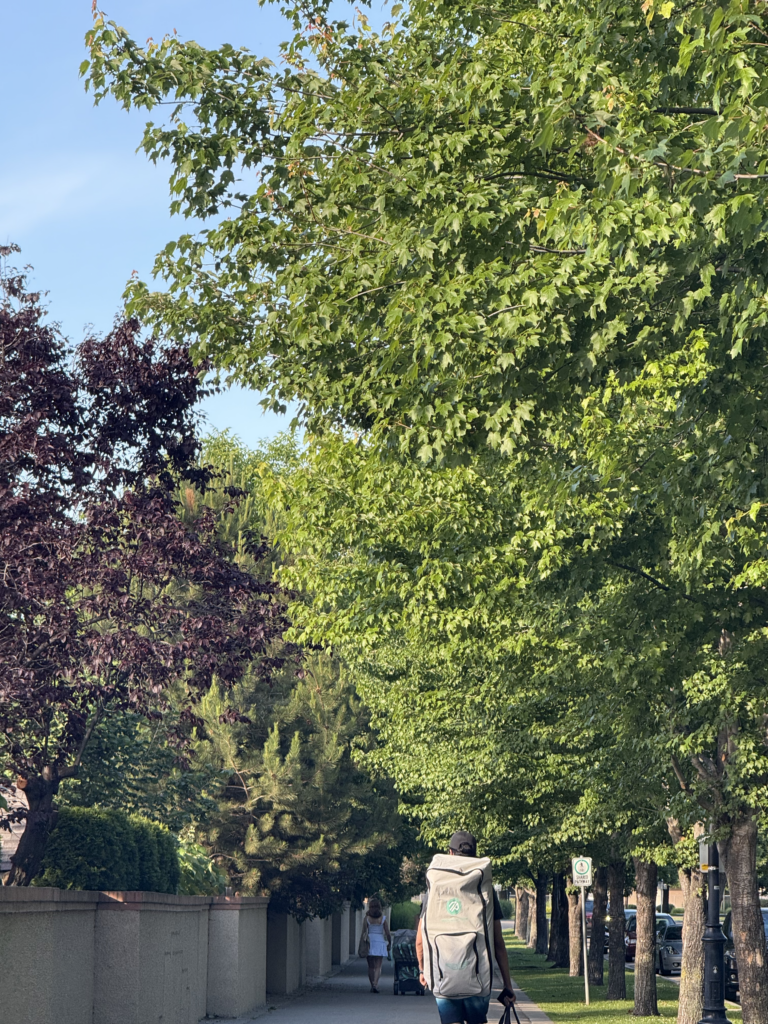
We climbed back onto Rotary Beach, took apart all of the gear, packed the deflated paddle-board into a large bag, and changed into our extra clothes for the day.
As we headed back to the car, I reflected on how much more refreshed and happy I felt after the journey. My mind felt at ease, and I thought to myself about how taking the photos, videos, and audio recordings on the lake helped me stop and enjoy the beauty in the little things in life. It helped me to focus more on the present than on my usual daily responsibilities. Overall, I found it was a very rewarding experience.
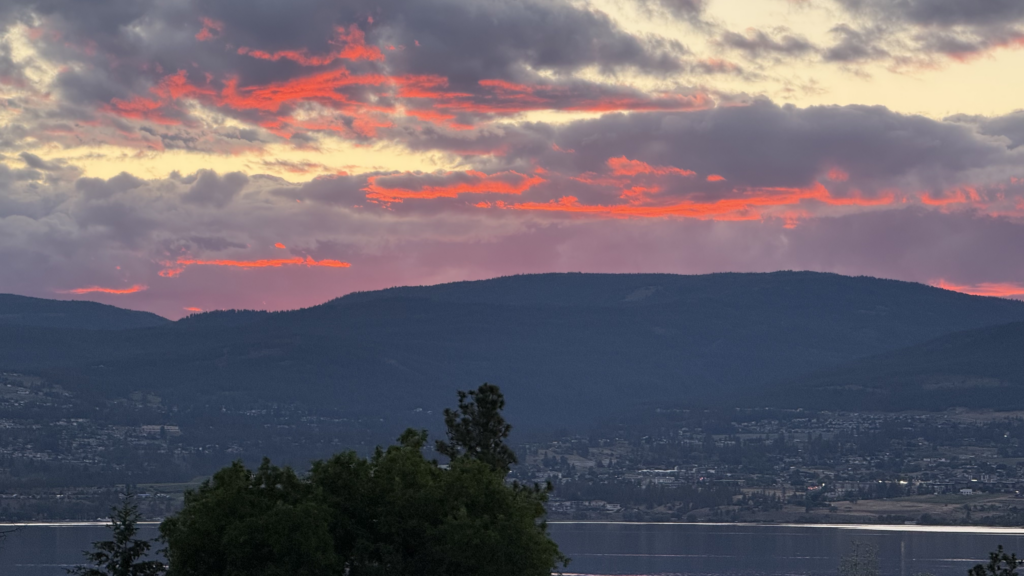
After the afternoon of paddle-boarding, we went out to get dinner and came back to see the sunset over the Okanagan Lake. It was quite a treat at the end of the day before finally heading home.
Multimedia Story Reflection and Alignment with Mayer’s Principles of Multimedia Learning
Reflecting on Storytelling
Creating this multimedia story allowed me to reflect on how different forms of media can support storytelling. Stories can be brought to life and better communicated through videos, pictures, and audio. For example, I found that accompanying my thoughts and feelings with photos of my observations could help readers gain a better understanding of the experience as a whole. Moreover, certain things that I found I could not sufficiently communicate through text alone (e.g., describing what I thought underwater sounds sounded like), were meaningfully supported by audio, as I realized some people may have different interpretations of my descriptions as opposed to listening to the audio themselves.
My Shapes of the Story Graphs
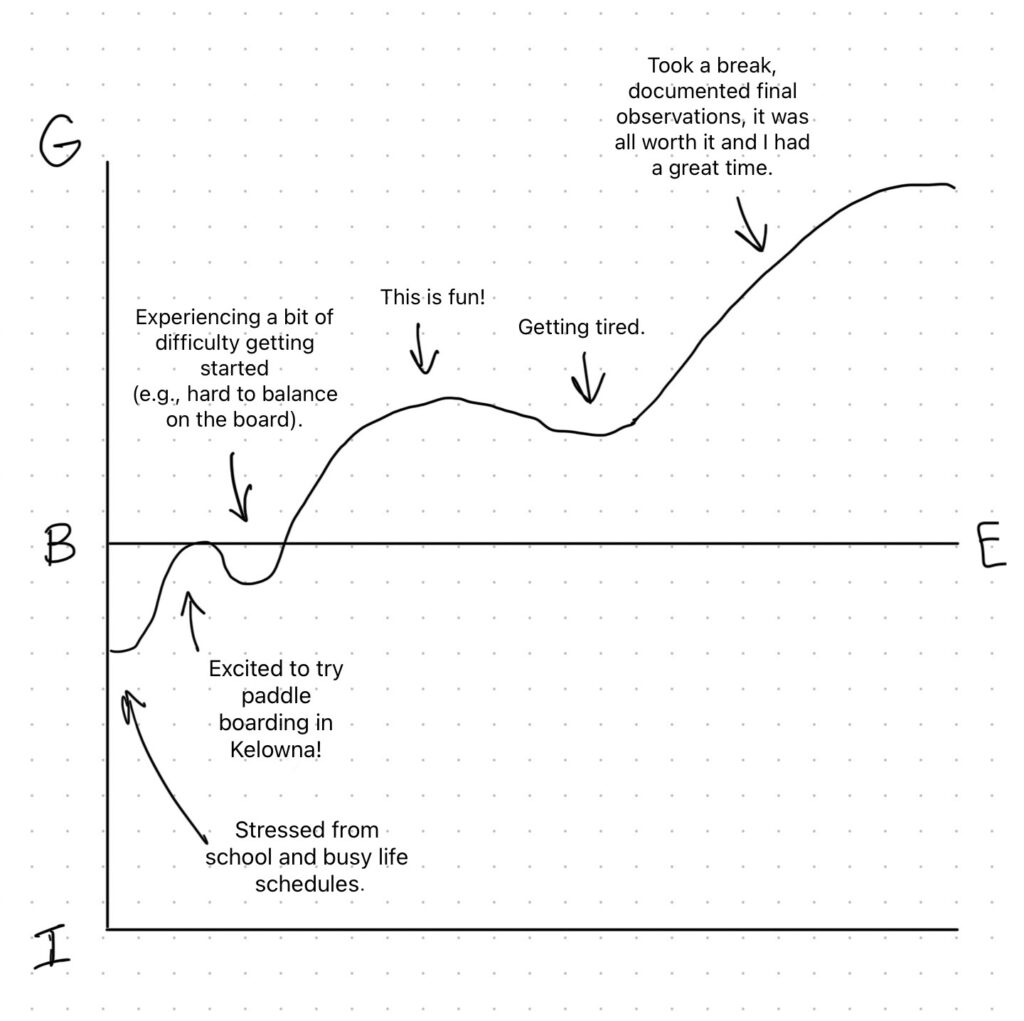
This multimedia story also allowed me to reflect on my moods. Before going out on the paddle-boarding adventure, I created a graph of what I expected (or at least hoped) the ups and downs of my moods would look like throughout the story, based on Kurt Vonnegut’s “Shapes of Stories” graph (Comberg, 2010). I was hoping the adventure would be worthwhile despite some expected obstacles.
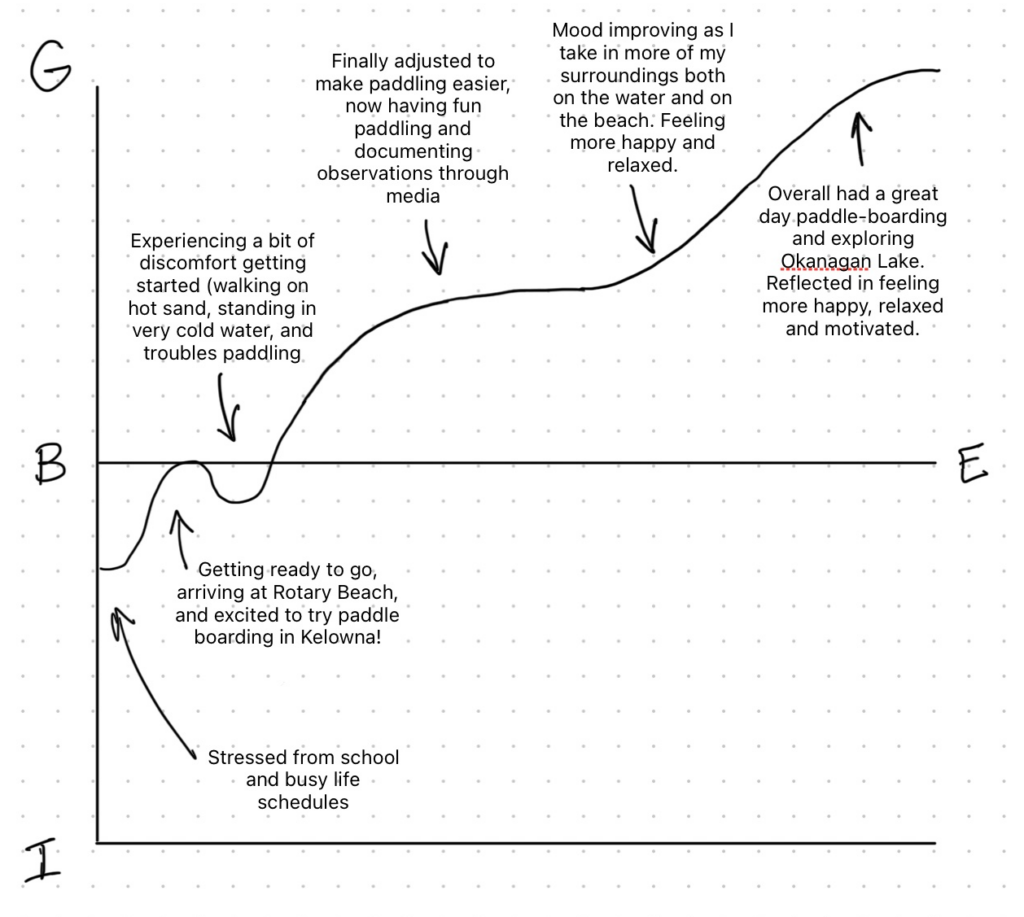
In reality, my moods turned out to be more positive overall than expected, which I’m very glad about! Below is a graph that I created after the adventure depicting my actual moods throughout the adventure, using the idea of Kurt Vonnegut’s “Shapes of Stories” graph (Comberg, 2010). Overall, I went from feeling stressed and occupied with day-to-day work to happier and more relaxed and motivated after this paddle-boarding adventure.
Alignment of Mayer’s Principles of Multimedia Learning
Another thing I learned through the creation of this multimedia story is how to align media with Mayer’s Principles of Multimedia Learning. I aligned my multimedia story with the coherence principle, signalling principle, contiguity principle, and personalization principle.
Coherence Principle
I incorporated the coherence principle in my multimedia story by staying focused on the topic of the story. For example, I cut out the part of showing my dinner and explaining what I ate at the end of the day, as I realized this takes away from the story of paddle-boarding and exploring Okanagan Lake. However, I kept in all parts that were relevant to observing, exploring, and paddling on the lake, along with my thoughts and feelings during the journey. Overall, I used media including text, images, videos, and audio recordings that were relevant to my paddle-boarding experience and exploration.
Signalling Principle
My multimedia story aligns with the signalling principle as I used several headings to highlight key parts of the story such as “Making Our Way to Rotary Beach”, “Paddling Along the Kelowna Paddle Trail”, “Arriving at Boyce-Gyro Beach”, and “Heading Back Home”. These headings make it easier for readers to follow the progression of the story and to understand what is happening at what point in time and where.
Contiguity Principle
My story follows the contiguity principle as it keeps text and relevant media (pictures, videos, and audio) close together in order to make it easier for readers to associate words with media and clearly understand what is being communicated. If text and relevant media were spread apart, it would be harder for readers to understand the story. For example, if I communicated that I saw seagulls, but did not show a photo of a seagull in the story until the very last image, this would complicate things and not allow for readers to see relevant information in one place. Instead, they may find it at the end and wonder what the photo of the seagull is doing there instead of when I mentioned it. This also may cause readers to have to search for information that aligns with pictures, videos, or audio.
Personalization Principle
I used the personalization principle when creating this multimedia story by using conversational language than a more formal tone in my text. I narrated the story in first person using words like “I” and “We” to describe the progression of events and decisions made, along with personal observations and feelings throughout the story.
Incorporating Peer Feedback
I received feedback from one of my peers in my learning pod in our class of Multimedia Learning. She stated that I may consider tying back my multimedia story to a concept explored in my multimedia story draft, such as the shape of my story. For context, in my multimedia story draft (before I started the paddle-boarding adventure), I included a graph of what I guessed the ups and downs of my moods would look like throughout the story, using the idea of Kurt Vonnegut’s “Shapes of Stories” graph (Comberg, 2010). My peer suggested I could compare that graph to what actually happened in terms of my moods/shape of the story. So within this full multimedia story, I included a similar graph to show the reality of my moods throughout the story (a.k.a. what actually happened) and compared this to my initial graph that depicted what I expected my moods to look like.
Recent Comments