Overview
Hello everyone and welcome to the first post of my blog! This week, I explored creating texts based on challenges found on the Today’s Daily Create (TDC) website for my course, Interactive and Multimedia Learning (EDCI 337).
I spent time going through three of the Writing Daily Creates, which led me to create a poem on a lost sock, a story where words and phrases are built in alphabetical order, and a thought-provoking description of what silence is, as can be found below.
Creating these texts allowed me to explore my creative side, gain insights on the challenges, and learn how to create engaging texts, and I would like to share them with you!
My Daily Creates
National Lost Sock Memorial Day
I lost my sock.
Oh where did it go?
Is it far or near?
I do not know.
Did I lose it at the beach,
when I took them off to swim?
Or did I lose it in my sheets,
when I lay for “just a min’”?
Did I put it in the closet,
after I did the laundry?
Or perhaps inside my pocket?
No that cannot be.
Oh there it is!
Not where it should be.
Under the table with my cat,
As he grabs it with his teeth.
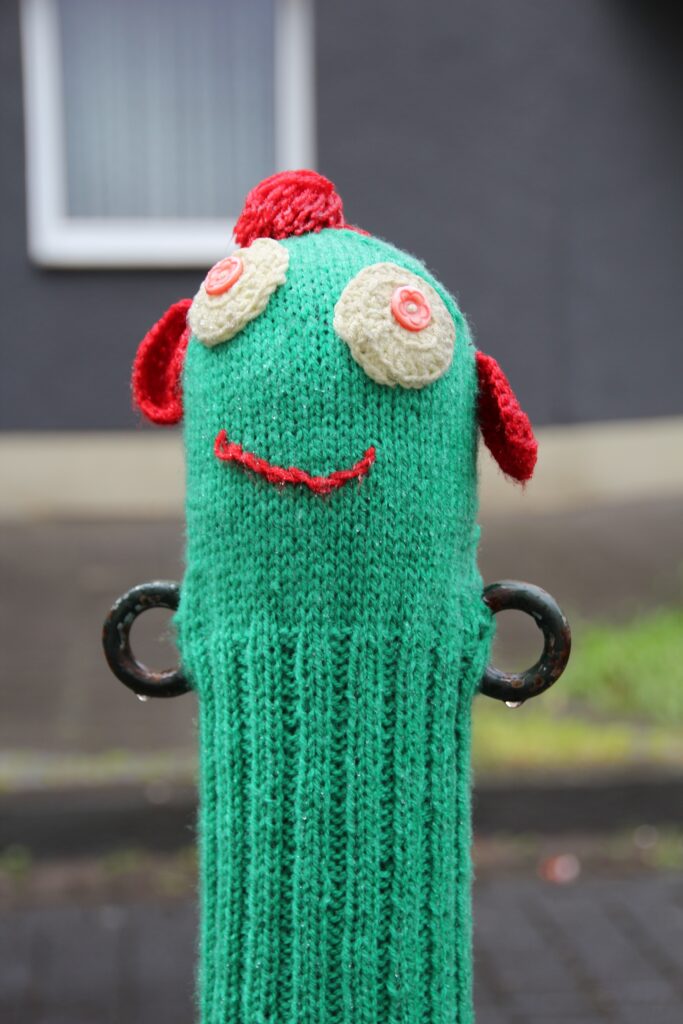
Write an Alphabet Story
At night,
Beatrix the witch went into the yard where her
Cauldron could be found. Her witch friends shortly joined her, bringing
Dreadful objects for their midnight spell, including bats, frogs, jars of flies, and snakes.
Each witch gathered in a circle around the cauldron.
Finally, they chanted their spell:
“Goblins and trolls,
Harrowing souls,
Illness and pain, don’t come again.
Joy shall be brought,
Kindness shall reign, and
Love and life will be brought once again”. Then the witches threw in the ingredients, and
Mashed up a soup
Night turned to day,
Owls fell asleep,
Packing up the soup into a covered bowl, the witches went to the
Queen, who lay ill in bed. As they fed her the soup her cheeks turned
Rose once again, and life returned to her eyes.
She delightedly drank the soup, and
Thanked her friends.
Upon her wake and healing, she
Vowed to protect the witches from inquisitors and return their favour
With gratitude everlasting.
Describe in Writing for Someone Who Cannot Hear, the Feeling of Silence
Silence is the absence of a particular sound of importance.
You may hear noises in the background, the whirring of the lights above you, the sounds of cars outside a window, the sound of your own breath.
But these sounds are unnoticeable as your mind focuses on finding a sound of importance, perhaps a voice of a friend or family member, or the sound of the telephone ringing as you wait for an important call.
Not noticing the unimportant background sounds is as easy as not noticing that you are blinking every few seconds. But once you become aware, it is no longer silent.

Reflection on My Daily Creates
General Observations
This week in the Interactive and Multimedia Learning course (EDCI 337), I started with the poem of a lost sock for “National Lost Sock Memorial Day”. Upon first glance of the instructions on the website, I felt a little overconfident, thinking this would be super easy to finish. Five minutes in, and I barely had three lines on the page! I found myself contemplating too much on what to write about, and eventually decided to just wing it and make it up as I go. I found the less I stressed about what to write, the more fun I had and the easier and better the poem came out to be. To me, this is interesting because the more I actually started to enjoy the work and not perceive it as a chore, the “easier” the task felt.
The next thing I started working on was writing an Alphabet story, as specified under “Write an Alphabet Story” on the TDC website. Here, I wrote a story where words and phrases were formulated in alphabetical order at the start of each line. Surprisingly, I found this activity to be slightly less challenging, as I think I started to get into the flow of writing things. I happened to be writing each of the texts on the same day which allowed me to have a continuous learning experience. However, one thing to note about this task is that I did spend a bit more time on it overall as I started to enjoy the activity and got a bit carried away. Nonetheless, I think as I started to get more into the flow of writing, my mind shifted from extraneous cognitive load and intrinsic cognitive load to more germane cognitive load.
Alignment with Theories of Multimedia Learning
During the first task (the lost sock poem), I found difficulty in deciding how to structure my poem. Since I had little to no experience in writing poems, it required more intrinsic cognitive load for me to figure out what to write in the poem. I also had to think about answers to the questions, which were very open-ended, such as “Who lost the sock? Where did it go? Who found it? Is there a happy ending?” (The DS106 Daily Create, 2026). Additionally, there were no instructions in the activity as to how to structure the poem. The design of these questions and lack of instructions in this Daily Create required more extraneous cognitive load from my end.
As I transitioned to working on the Alphabet story, not only did I already have prior practice in writing after the first task, but I had a laid out template to follow the alphabetical order. This reduced extraneous cognitive load for me along with a bit of intrinsic cognitive load. While it was a bit tricky to piece together words starting with letters and connect them, I could make the lines as long as I wanted until I thought of a word that worked with the next letter. This suggests that intrinsic load was not fully eliminated, as the task was still fairly challenging, but it was definitely easier than the previous task. For this task, I used more germane cognitive load as my learnings from both writings became more integrated into my long term memory. I say they became a part of my long term memory because this was one of my first experiences with creative writing in a long time and I really enjoyed it, ultimately leading this to be a more memorable experience for me.
The final writing activity I did was writing a description of what silence is. In this activity, I had to describe silence as if I’m describing it to someone who cannot hear. I found this activity to be the easiest because the instructions were quite straightforward and at this point I had a lot more practice with creative writing. I made it up as I went along and ended up going from a simple description of silence to a thought-provoking message of how “silence” is not always exactly silent as it is easy to tune out background noise. I think by the time I got to this final writing task, I used the least amount of extraneous cognitive load as I was more familiar with the activity style.
References
The DS106 Daily Create. (2026, May 9). tdc5230 #ds106 #dailycreate National Lost Sock Memorial Day. https://daily.ds106.us/tdc5230/
Recent Comments