Overview
This week, I created three images following instructions in the activities on the Today’s Daily Create (TDC) website. First, I turned a photo of my TV stand into an image of a monster using my phone. Then, I created an imitation photogram using my phone camera and a glass table. Finally, I took a photo of an everyday object that appears to be spying or surveilling me, my vacuum.
Daily Creates
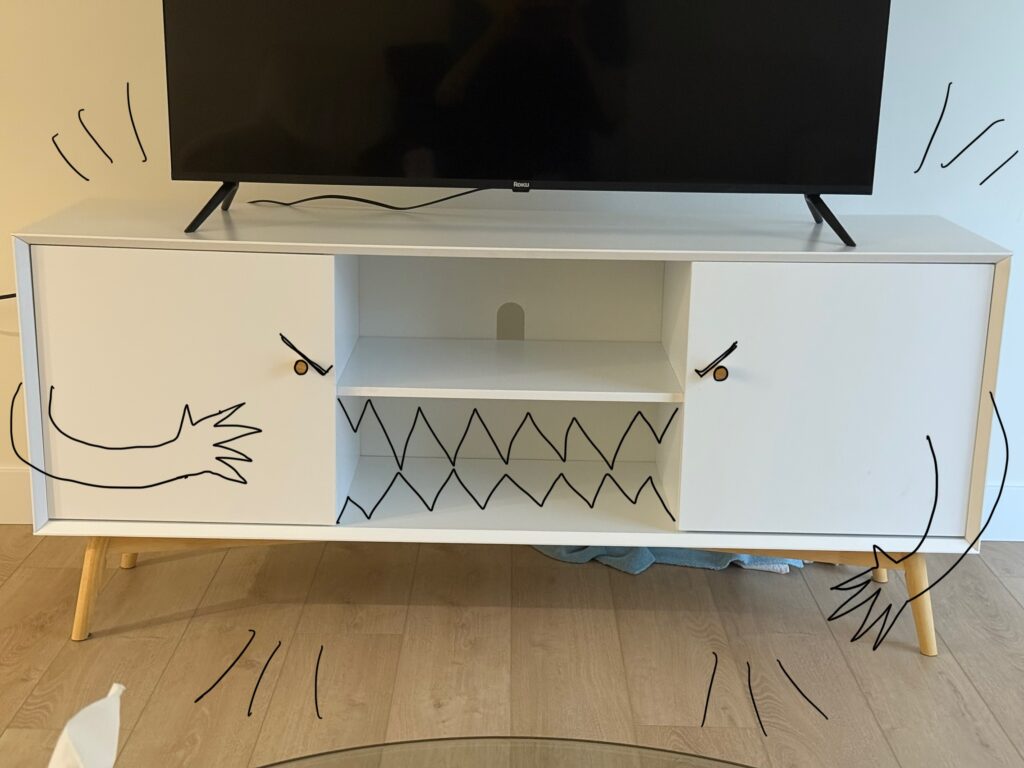
Monster Art
For this Daily Create, the instructions asked me to turn a photo into monster art. Long before knowing about this daily create, I noticed my TV stand looked like its cabinet knobs were eyes and the shelf were a mouth. I decided I would take a photo of it and bring to life what I had imagined. It looks like the monster is hungry for DVDs and video game cartridges.
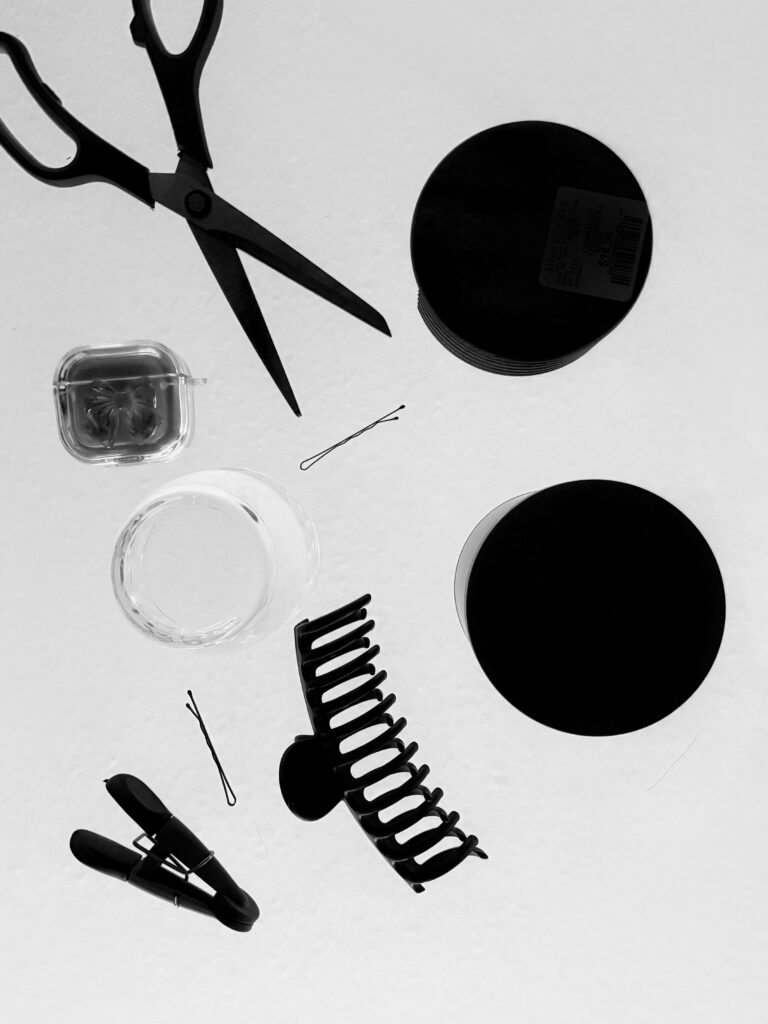
Photogram It
This Daily Create asked me to make a digital photogram without special paper or chemicals, so I placed objects in my house on a glass table and took a photo from underneath it. Then I edited the photo to make it black and white. Usually photograms have a black background with white objects, but some can be made to have a white background with black objects much like this photo I made.
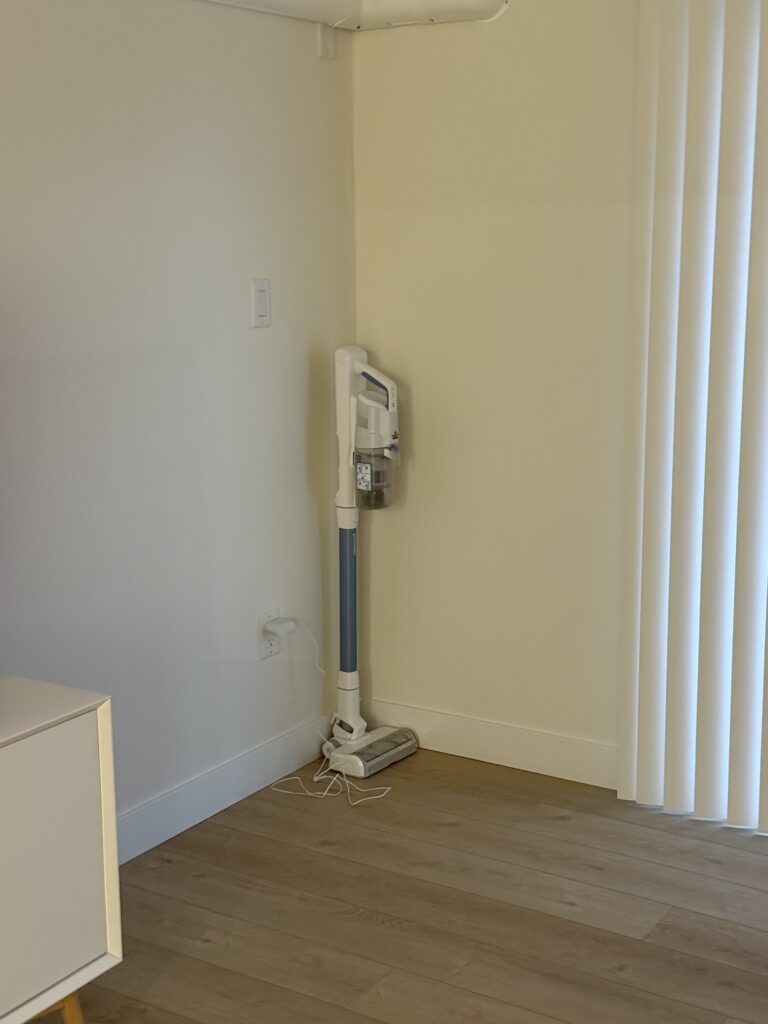
Add a Subtle Bit of Surveillance to an Every Day Object
This Daily Create had instructions stating to create a photo of an everyday object that looks like it has the capacity for surveillance (e.g., with cameras, wires, microphones, or sensors in it). I saw my vacuum cleaner in the corner in the living room and took a photo of it. It sure looks like it’s surveilling my every move.
Reflection
In multimedia, images are often used to communicate ideas, stories, knowledge, and emotions. It also helps viewers grasp a better understanding on what is being communicated by visualizing things that support text. Creating these images for the Daily Creates opened my eyes towards how everyday objects and photos can be transformed to bring meaning, especially if these images are photographed or edited to create or support that meaning. For example, the TV stand monster art helped me to understand how meaning can be assigned to an image. This idea connects to the course concept that “students usually learn better from words and pictures than from words alone” (Schnotz, 2022, p.92, as cited in Granchelli, 2025b). While my Daily Creates are mostly image-based, the explanations and text associated with each image help to provide context that can make it easier for others to understand.
My TV stand monster was edited to give it meaning and text supported it within this blog. Same goes for the vacuum, as the text suggests a story behind the image, where the vacuum is spying on or surveilling me. These Daily Creates can be tied to dual coding theory where two separate parts of the brain process text and visual information (Granchelli, 2025b). The image I made provided meaning while the text explained the creativity and meaning behind it.
Finally, the photogram activity required active processing from my end, as I had to think about the correct angle to use, what objects would look nice in the photo, and how to make the photo look like a photogram. Granchelli (2025a) states that active processing involves “filtering, selecting, organizing, and integrating information”. I researched information online about what photograms are and how they are created, then I selected the objects to include in the photo, and organized them on the table. This contributed to my learning on how to create images, combined with my new understanding on how images can create meaning.
References
Granchelli, A. (2025a, September 5). Theories of multimedia learning. EDCI 337. https://edtechuvic.ca/edci337/2025/09/05/theories-of-multimedia-learning/
Granchelli, A. (2025b, September 11). Text and image: The sum is greater than its parts. EDCI 337. https://edtechuvic.ca/edci337/2025/09/11/text-and-image-the-sum-is-greater-than-its-parts/
Recent Comments